The Difference Between Managing Queues and Managing Expectations
Every organization wants shorter wait times. That goal is reasonable and necessary. But across healthcare, banking, government, retail, and logistics, we repeatedly see the same pattern:
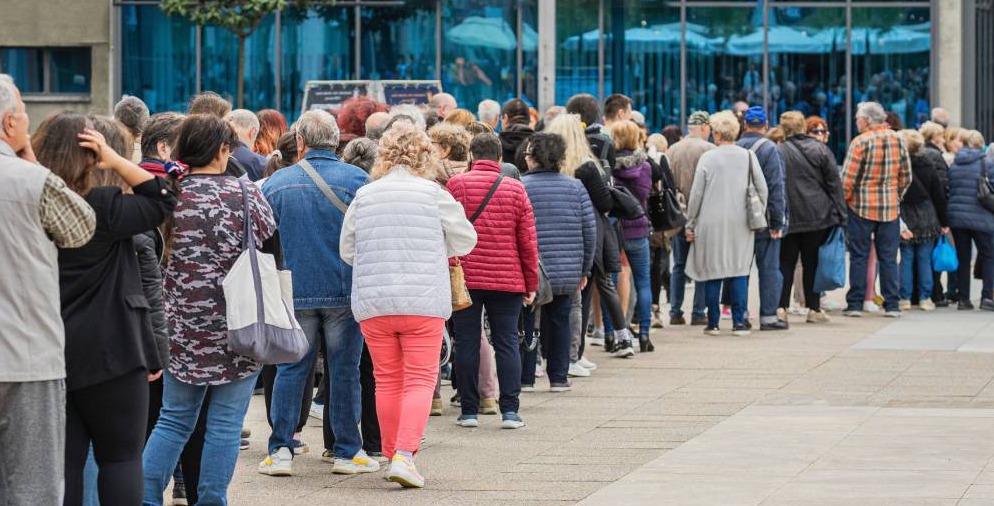
You can improve the queue system and still disappoint the customer The reason is simple. Customers don’t experience your service through reports or metrics. They experience your service in real life, often when they are busy, tired, or in a hurry. What sticks with them isn’t just the wait time, but how the waiting felt. That’s why it’s important to separate queue management from expectation management. They go hand in hand, but they’re not the same. When organizations treat them as one, they often add tools without solving what customers actually care about.
Queue Management Is Operational, Expectation Management Is Psychological.
Queue management focuses on efficiency. It deals with how people move through a system:
- arrival rates
- service speed
- staffing and capacity
- routing and prioritization
In short, queue management is about flow.
Expectation management, on the other hand, is about perception. It focuses on what customers believe is happening:
- Do they know they have been registered?
- Do they understand what will happen next?
- Do they feel the process is fair?
- Do they know how long it will take?
Research and everyday experience show that people often think they have waited longer than they actually have, especially when no information is provided. When customers are left guessing, even a short wait can feel long and frustrating. Clear communication helps by reducing uncertainty. Reducing the wait is important, but reducing uncertainty is just as critical.
Customers Feel Expectations, Not Metrics
From a business perspective, unmanaged queues and unmanaged expectations lead to different outcomes.
While poor queue management may lead to silent churn, poor expectation management leads to active brand erosion through negative feedback. They give up waiting, postpone their task, or never return. Poor expectation management creates vocal frustration. Customers complain, post bad reviews, and turn into critics; not because of the wait itself, but because they felt confused, ignored, or treated unfairly Modern customers have less patience than ever. Once people feel that a wait has exceeded what they were led to expect, satisfaction drops sharply. In this sense, a queue is not just a line; it is a conversion funnel, and uncertainty is the leak.
Why Speed Alone Is Not a Strategy
Many organizations try to solve waiting problems by focusing only on speed. They add counters, install a queue system, optimize staffing, and expect customer satisfaction to improve automatically.
Often, it does not. A faster service without communication can still feel slow. Silence during a wait does not feel neutral; it feels dismissive. Customers interpret the absence of updates as a lack of care or control. This is why queue management alone is no longer enough. Customers experience service as a journey, not as a separate system. They move between appointments, queues, signage, notifications, and follow-up. When these elements are not aligned, the customer experience feels fragmented, regardless of the actual wait time.
What Managing Expectations Looks Like in Practice
Managing expectations does not mean empty messages like “Thank you for your patience.” It means designing the waiting experience so customers feel informed and respected.
Make the Wait Visible
Instead of simply asking customers to wait, provide clear information: estimated wait time, position in line, and service progress. When people understand what is happening, they stop guessing.
Give Customers Back Control
Virtual queues allow customers to wait without being physically stuck in line. With mobile check-in, real-time updates, and notifications, customers can use their time productively without losing their place.
Signal Fairness Clearly
Nothing frustrates customers more than feeling the process is unfair. When queue rules are clear and service categories are easy to see, customers feel reassured that the system is working fairly.
Measure Sentiment, Not Just Speed
The waiting experience does not end when service begins. Collecting feedback at the right moments helps organizations understand how waiting actually feels, and where improvements matter most.
The Aristo Star Approach: Managing the Journey, Not Just the Queue
At Aristostar, we see queue challenges as journey challenges. Our AI-powered Queue Management System, Queaxis, is designed for complex service environments such as healthcare, banking, retail, and government.
Queaxis combines real-time analytics, smart routing, and predictive wait-time estimation to improve both operational efficiency and customer experience. It integrates seamlessly with solutions like SchdMngr appointment booking, digital signage, and feedback tools, so organizations manage one connected service journey instead of isolated systems.
With over 18 years of experience and more than 500 customers across 15+ countries, we have learned that queue problems are rarely just software issues. They are a mix of policy, staffing, communication, layout, and culture, supported by the right technology.
Managing queues reduces the actual wait. Managing expectations reduces the emotional cost of waiting.
Organizations that do both achieve efficiency and trust. Those that focus on only one often end up solving the same problem again and again. Waiting may never disappear. But confusion, silence, and unfairness can.
That is the difference, and that is where modern customer experience management wins.